Sunday, 7 August 2011

Les Vignoles du Provence

This is the only way to start the day in Avignon (and indeed, in a lot of other places) with croissants and coffee, in the dappled shade of trees, at a streetside cafe. It is more than a cliche - it really is a way of life.

One of Avignon's claims to fame is that for a period of 200 years (around the 14th Century) a succession of nine Popes resided in what is now called Le Palais des Papes (Palace of the Popes.) It is a formidable building and similar to others that have withstood the tests of time, fire, plague, pillage and persecution, there is evidence of 800 year old construction work, as well as renovation and repair.

We've been blessed...with excellent weather!
At one time, the vaulted ceilings were elaborately painted and some of the thousands of terracotta floor tiles still retain their colourful, hand painted designs.

After the Palais de Papes, we embarked upon a wine tour of the Cote du Rhone region. We were the only two passengers in a mini-bus that was driven by a local French girl. We went to 3 wineries - two of which had very modern facilities and visitors' centres and then one of the more traditional 'caves' (cellar doors) in the Chateauneuf du Pape region.
Have a look at the rocky ground - apparently these grapes love it!

 A third generation wine maker taught us how to correctly taste the wine and compare the colour, clarity, arches, aroma, etc. We then explored the Chateauneuf du Pape village, including the ruins of an abbey high on a hill above the villages and vineyards of Provence.

Saturday, 6 August 2011

Towards Provence...

Still en France and on our way south, we stopped in at Nimes to have a look at the arena. If you think this looks old, you would be correct. It is at least 2000 years old - built by the Romans.


Slaves and gladiators once walked these dark and threatening halls...
but these days it is still used for concerts and other performances. Sadly, it is also used for bullfights, which they seem to like in this part of France. 

The oval arena is 130 metres by 100 metres and it is difficult to climb in some places and very, very high. I can't believe visitors actually brought babies in prams to this place. Here is an example of French workplace health and safety. Don't you love it?


Un autre jour, un autre chateau! (Another day, another castle!)

After Amboise, we continued to follow the Loire to Chateau Chenonceau. The Loire valley is not a deep one with mountains on either side, but a wide valley with gentle slopes and rises. Many of the chateaux and their surrounding grounds are hidden by forests of Sycamore and Oak trees. I love travelling up the shady avenues that lead to the beauty beyond.

 Chenonceau has beautiful, carefully planned gardens that are just glorious in the summer sunshine. The castle itself was true to the style of the time and the region, with white block walls, round towers  and dark grey roof tiles.
What makes Chenonceau stand out from the other castles however, is that it is built over the river and visitors can take boats under the arches. The halls and rooms of the castle are positioned over water and the views of the river and gardens are spectacular.
Chenonceau also has the largest collection of original tapestries that I had seen from the few castles that we visited. We were not allowed to take flash photographs of the tapestries, in order to protect them. During the summer, a floral festival has been in full swing. I dont know what these purple flowers are but they are definitely worthy of a photo.
I do recognise the snapdragons, but Ive never seen them so beautifully presented.
After leaving the castle, we headed to Arles, to see why Van Gogh might have gone there. It didnt take long to find at least one of the reasons. Ah sunflowers! The French call them tourne sol, which means 'turn to the sun.' There were many, many fields just like this one and they take your breath away every time.

Friday, 5 August 2011

Chateaux Numero Deux.

The second castle on the list is called Chateau d'Amboise. It sits alongside the Loire River and has beautiful manicured gardens.

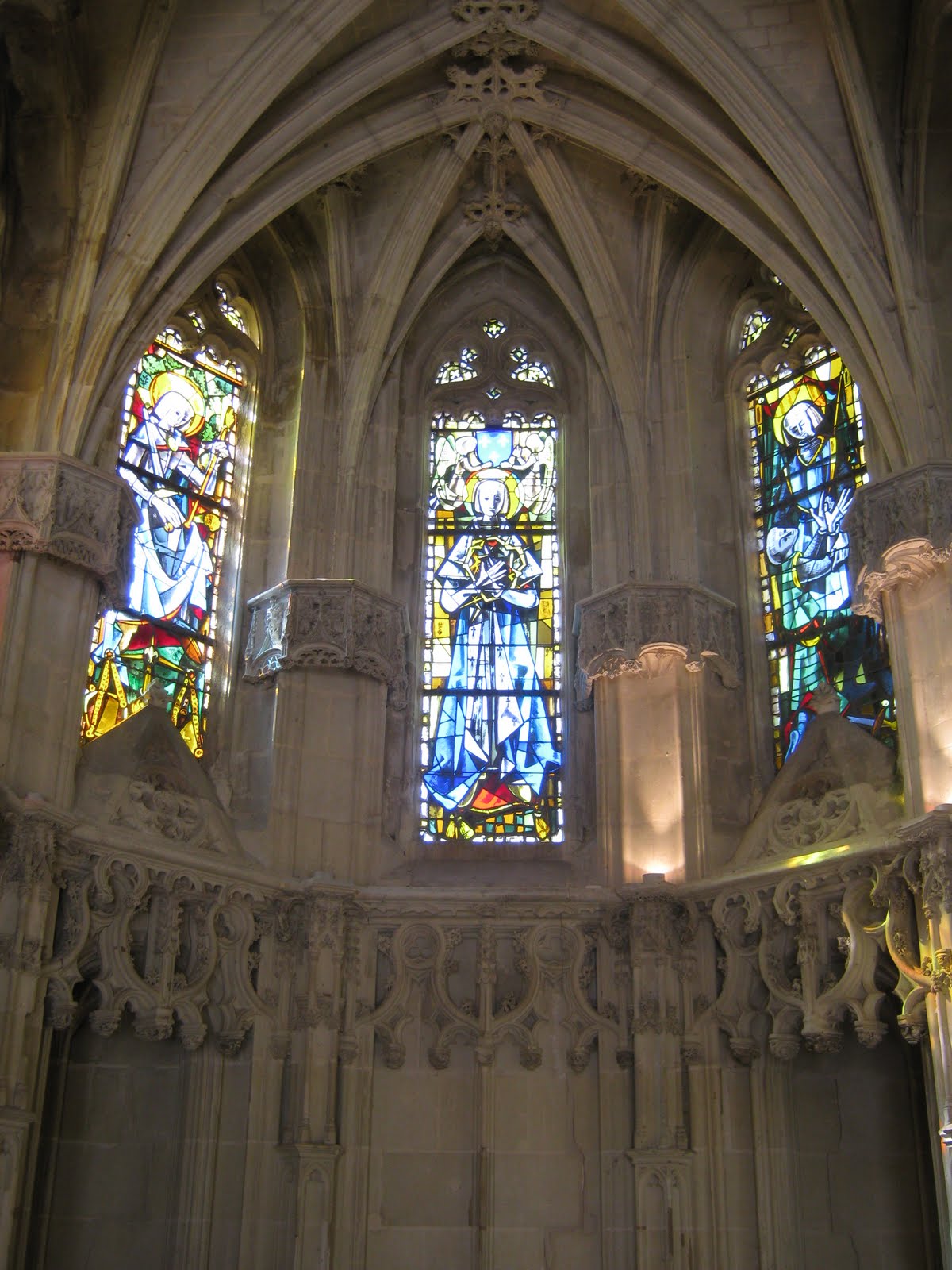
 We explored the chapel with its exquisitely decorative carvings and stained glass windows and toured the interior of the castle, where some original tapestries still hung on the walls.
The back of the castle featured a lovely arbour...
where we had morning tea in the shade.


Thursday, 4 August 2011

Les Chateaux de la Loire.

The Loire Valley region in France is reknowned for its castles. These are not the castles of old England - big rectangular jobs built from brown stone. We glimpsed the Chateau de Chambord at the end of a road through the woods, lined with signs that reminded us that deer may jump into our path at any moment.
 This was the scene that appeared before us when we left the clearing of trees. The scale of this particular castle is overwhelming. The grounds are huge and it is surrounded by a moat, where visitors can row or use paddle boats. There are classical music and choral performances held in the grounds during the summer.
With its cone-shaped tower rooves and elaborate carved decorations, it looks as if I am standing in front of a film set or a green screen, but this is real. There are more castles to come. Adieu!

Monday, 1 August 2011

Bienvenue a Blois!

We arrived at our hotel on the outskirts of a town called Blois, in the Loire valley region, a little too early for check-in, so we headed for the town centre to have a late lunch. But it was Sunday and the streets were deserted.

 We eventually found baguettes avec jambon et fromage, as you do when in France. Then we heard strange noises - have a look at the building to the right of the umbrellas.
 A group of huge animated dragons were roaring and snapping out of the windows while music played. After a few minutes, they went back inside as if nothing had happened.
 We took a horse and buggy ride around the town, which is always a useful exercise in getting your bearings in a new place. Blois is built around a castle, and some of the old surrounding wall is still intact.

 The castle features the round towers and cone shaped roofs that are typical of the French chateaux. We are heading along the Loire River to visit more castles tomorrow. Adieu!

Sunday, 31 July 2011

Oh la la!

Before we went to visit Monet's house and garden at Giverny, we stopped off at another house on the way. This one had been occupied by French royalty however, and mon dieu, don't the French like a bit of decoration?! Welcome to the Chateau de Versailles, where too much gold leaf is never enough.
 They used it on the walls and on the ceilings and on the light fittings...
 They used in on the paintings and over the fireplace. Yes, those are whole trees in that fireplace.

 Here's a demure little treatment in the Queen's bed chamber and below is a glimpse of part of the garden. There is opulence and extravagance all around. No wonder the peasants revolted!
 One thing that the French do very well however, is the tree lined footpaths. Each town has their own variation on the theme, but the idea is very civilised, comfortable and quite splendid looking, n'est-ce pas?