Sunday, 4 September 2011

Here a schloss, there a schloss, everywhere a...

Over the weeks we have stayed in a wide variety of lodgings and Schloss Engers near the German town of Koblenz was set to be one of the more novel experiences. We thought we were staying in the Schloss (castle) itself, pictured here, which overlooks the Rhine.
Our room however, was located in the castle guesthouse, which was in a quaint little village a bit further down the cobbled street. The small town of Engers has been built up around the schloss, which was originally constructed as a hunting lodge around 1760.

The restaurant at the back of the schloss directly overlooks the Rhine river. It was a perfect spot to eat a meal and watch the river traffic.

Who would have thought you'd get fresh mango in your chicken salad in the heart of Germany?


So if you happen to be near the Rhine, then a cruise is a must. The region is famous for its wine, most notably white wines, so a large percentage of the river banks are devoted to growing grapes. The other attractions are the castles - we lost count of how many there were.

Wherever there is a castle, there is a nearby village.

Passengers can disembark at any of the stops on the route to enjoy a meal, shopping or just soak up the village atmosphere. We travelled on a hot, sunny day so all the Europeans were soaking up the sun, with scant regard for hats or sunscreen.
Some of the castles were dark and rather Medieval in appearance, whereas others were white and bright, with a French flourish about them.
And all the way along the river - the vineyards, all set at a 45 degree angle to the river.
We stopped our journey at a pretty village called Rudensheim.


Thursday, 1 September 2011

Modern History 101

Still in Berlin...while our hotel was only a couple of blocks from the Berlin Wall memorial display, it was also just a five minute stroll to Checkpoint Charlie. This was a famous crossing point that was managed by the U.S. Army for the duration of the wall's existance. This is what it looks like today, with tourists wandering about. Cafe Adler is on the right, but have a look at this older photo, with the cafe still on the right of the image.
The area still has a few city blocks that have not been built upon and there is a comprehensive display of information and images set up for visitors. We were amazed to learn about the events that occurred during the last few decades, of which we knew so little.
 It was named Checkpoint Charlie because it was the 3rd (A,B,C...) checkpoint place in order to cross from West to East Berlin when the wall was in place. It is also the place where 20% of the East German population defected to the west, and where some lost their lives when the Soviets adopted a 'shoot to kill' policy. Here is an old image from the famous 'stand off' in 1961, when Soviet and US tanks were on alert, waiting for the first move. Chilling!
Replicas of the famous signs are in place today...

and the soldiers have been replaced by stand-ins (most likely German uni students on Summer break) to take photos for a fee. They can also stamp a fake passport to show that you have crossed the border - all part of the experience!
We also visited the Jewish Holocaust Memorial. It takes up a large city block and consists of more that 2700 concrete blocks set in rows. The maze-like arrangement is designed to suggest an oppressive feeling as visitors make their way around.  
Below street level is the Holocaust Memorial Museum, which features stories of some of the dreadful events that took place during the war.
But while remembering those past events can be unsettling, Berlin is a city with a good feeling about it. It is clean and orderly, easy to navigate with plenty of museums, places to go and things to see. I'd love to go back some day.

Monday, 29 August 2011

Ich liebe Berlin!


While we were passing by a stream in the grounds around Terezin, we noticed an animal leaving the water, that was a lot bigger than the ducks. I think we spotted a Eurasian Beaver. It foraged about in the reeds for a while, then slipped back into the water and left. We left the Czech Republic and headed north-west towards Berlin.

As we neared the German border, Louise came back on line and guided us into the centre of the city, We were only 80 metres from our destination and sitting at a red light when AG and I both looked left and both gasped out loud. There it was as large as life, just metres from the car - the Berlin Wall - or what is left of it. This is the West side.

This remaining section of the wall is about 100 metres long and features memorial displays about the wall's history, including pictures and audio recordings. The wall went up at the end of 1961 and separated East and West Berlin until 1989, when the power of the people forced the end of the Communist regime in Eastern Europe.

 Below is the Eastern side. Over the years, visitors have chipped at the graffiti to take pieces away as souvenirs.
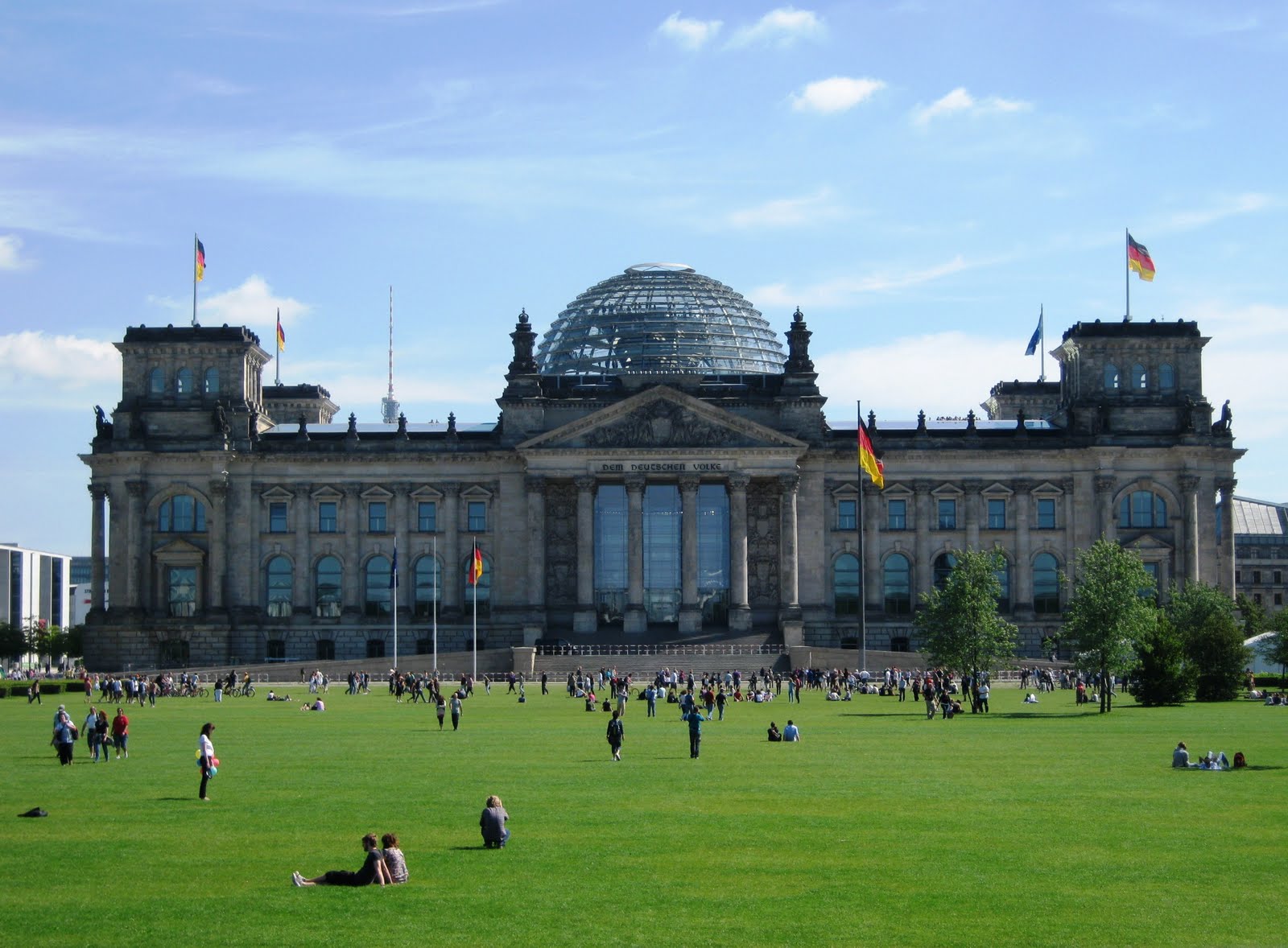
 Another hot tourist spot is the Brandenburg Gate.


Berlin's city buildings were severely damaged by bombing during the second World War and after the wall went up, the eastern side remained largely unrestored. With the reunification of Germany after the wall came down, there are new buildings everywhere, but they are not lifeless, ugly skyscrapers. The city is looking clean and smart and very 'livable.' There is a balance between the historic...

and the modern...

but wherever we went in Berlin, there were groups of people out and about, enjoying the summer weather and the many green, open spaces. There was a Police promotional display in the gardens while we were there. I have to admit to having a little run in with the law. What's a girl to do? 

Saturday, 27 August 2011

Terezin

Louise didn't really pull her weight in the Czech Republic. We were a little bit horrified when we realised that we would have to do things the old fashioned way - like read a map. This seems straightforward until you realise that all the road signs are in Czech.
After Prague, we drove north west to Terezin. It was originally known by its German name of Theresienstadt and it is by this name that it has become infamous. It was a fortress town, purposely built as a military facility in the 18th century. Over the years, it has served as a barracks and a prison, but during WW2, it was used by the Nazis as a concentration camp.
Even though large scale exterminations were not carried out at Theresienstadt, it was a major transfer centre for groups of people sent to camps like Auschwitz and Bergen Belsen. Many people died here after beatings and interrogations, Typhus outbreaks and executions.
The fortress is surrounded by a moat that is fed by 2 rivers and the flow of water was able to be controlled when required. 
During the war, Theresienstadt was the site used in the making of a Nazi propaganda film that misled the Red Cross into believing that the camp was like a health farm and that people had nothing to worry about by being taken there. Trains brought people from all over Europe to Theresienstadt for 'processing.' 
The ironic slogan which appeared on the gate of several concentration camps - Arbeit Macht Frei - work sets you free.
This large bath room and the shower room, still have the mirrors and plumbing fittings that were in place during the war.  

The rooms that did not feature in the promotional film however, housed 60 people in squalid and crowded conditions that would have been freezing during the winters.
The crematorium where eventually 38,000 cremations took place. Earlier in the war, ashes were placed in heavy paper containers and buried. Towards the end, ashes were dumped into the nearby rivers.
To spend time in a place with such an appalling history is unsettling, but compelling. The nearby town is a sad place - rather like a ghost town - but it includes museums with artefacts and details of a time in history that should not be hidden away and should never be forgotten.

Friday, 26 August 2011

Prague - Curiouser and curiouser...

Our adventure took an interesting turn when we entered the Czech Republic in order to visit the city of Prague. Believed to have been founded in 880, Prague Castle sits high on a hill above the city and is the largest castle complex that we have visited. I think the crowds in Prague were the largest that that we have encountered as well.
The view from the castle walls show a vast sea of terracotta tiles. I was amazed by the scale of the city, which features an old town with narrow cobbled streets and ancient buildings, as well as a new town with all the western trappings that you can imagine.
The enormous St Vitus Cathedral is an architectural masterpiece in the Gothic style and located within the castle complex.
Many of my photographs of Prague show only half of the buildings, because of the sheer size of the structures. The interior of the cathedral was breath-taking.
We have seen stained glass windows before, but never this many, nor of this size. It was difficult to choose one as an example for this blog.
The richness and variation of the architectural styles kept us shaking our heads in amazement.
 Before the communist regime, Prague was a cultural hub, frequented by prominent Europeans from the musical and visual arts. Many of the buildings are decorated in styles that we have seen in France, Germany and Austria.

 Wenceslas Square is situated in the 'new town.' It is famous as a gathering place for the Czech people in good times and in bad. It has been the scene of many demonstrations and protests as well as celebrations. It was hard to imagine that the street was once filled with Russian tanks and Nazi soldiers.
Prague has many museums and art galleries and we found this interesting installation tucked away in a lane near the the Communist Museum, which is located between a 24 hour casino and a MacDonalds. The irony is not lost on anyone!